
Trenchless Sewer Line Repair & Pipe Relining in Springfield, MO
A smarter path from sewer problem to solution. Find out what’s happening underground before committing to a torn-up yard.
Camera inspection first, written estimate before any work.
FREE ESTIMATE · STEP 1 OF 2
(417) 807-3050What’s going on with your sewer?
SEWER PROBLEM RIGHT NOW?
Main line backups, clogs, camera inspections & cleanouts
Most trenchless repairs start with a backup or a clog. Call first — we’ll help you figure out if it’s a clearing job, an inspection, or a pipe that needs repair.
Main sewer line backup
Sewage coming up in the lowest drain or several fixtures at once.
Emergency sewer clog
Toilets, tubs, or floor drains won’t drain and it’s getting worse.
Sewer camera inspection
Recorded video to find roots, breaks, and bellies before paying for repair.
Call (417) 807-3050 and we’ll talk through next steps.
The right repair starts with seeing the whole picture.
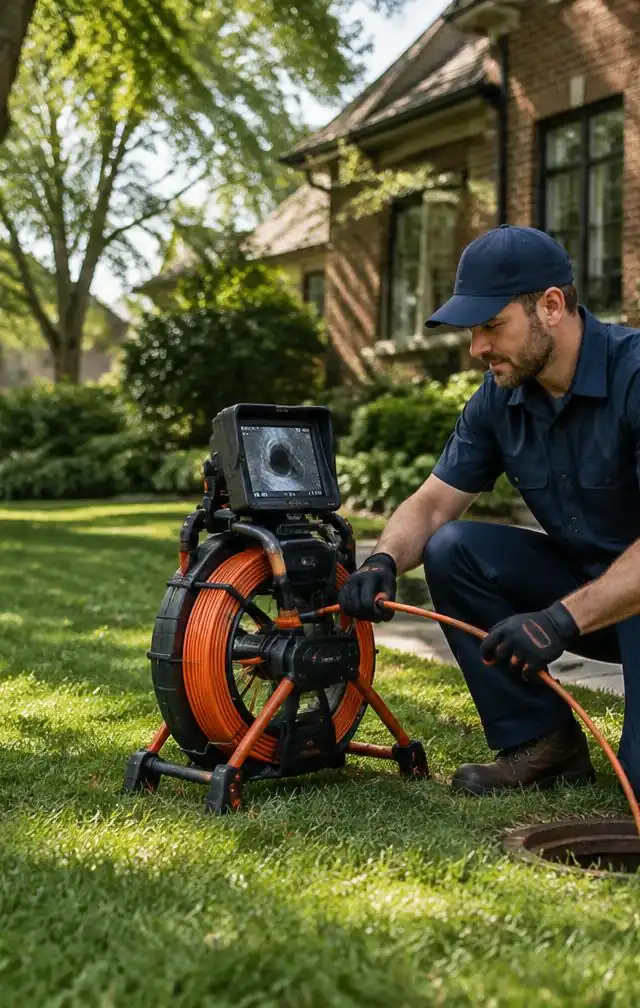
A sewer backup doesn’t always mean you need to excavate. Camera inspection helps locate damage, understand pipe condition, and choose a repair that fits your property.
Inspect the line
Locate roots, cracks, offsets, and blockages with a sewer camera.
Compare your options
Determine whether lining, pipe bursting, or excavation fits the condition.
Plan the repair
Review access, restoration, permits, and warranty terms before work begins.
How do sewer repair methods and costs compare?
No single method is best for every line. Select a method to compare access, yard impact, cost factors, and ideal use.
- ACCESS NEEDED
- Existing access points when suitable
- YARD IMPACT
- Typically preserves most of the yard
- BEST SUITED FOR
- Cracked or root-damaged lines that retain a workable shape
- PROJECT CONSIDERATION
- Often less surface restoration
- COST FACTORS
- Liner length, cleaning, access, and pipe diameter; typically less landscape restoration to budget for
A camera inspection and site evaluation are needed before recommending a method or quoting a price.
Springfield ground is different. Your repair plan should be, too.
Rocky Ozarks limestone, shifting clay soils, mature trees, and older service lines all shape how a repair is evaluated.
Ozarks limestone & clay soils
Rock layers can make deep excavation more disruptive, while clay movement can stress existing pipe joints. Access and pipe condition matter more than assumptions about the surface.
Historic neighborhood pipe failures
Older clay and cast-iron lines may be vulnerable to root intrusion, separated joints, corrosion, and recurring backups. Camera footage helps identify whether cleaning or structural repair is needed.
Permits and utility coordination
Requirements can vary by location and scope. Permit requirements vary by municipality and scope; they’re reviewed as part of your written estimate.
No-Dig Sewer Repair: How Cured-In-Place Pipe (CIPP) Lining Saves Your Yard
CIPP creates a resin-cured liner inside an eligible sewer lateral using existing access where possible. It can reduce the need for a continuous trench, but cleaning, access, host geometry, and structural condition determine suitability. Camera inspection and an engineered scope come before any repair recommendation.
A camera scope documents defects before roots are removed and the liner is sized. Once installed and cured, the line is checked again. Explore CIPP lining details →
Traditional Excavation vs. Trenchless Sewer Repair in Springfield
Lining retains a suitable host pipe, bursting replaces a failed pipe through localized entry and exit pits, and excavation exposes the line directly. Cost, duration, lawn impact, and service life depend on pipe condition and site constraints. Compare complete written scopes rather than a single per-foot figure.
| Method | Price per foot | Lawn disruption | Duration | Restoration cost | Structural lifespan |
|---|---|---|---|---|---|
| Trenchless CIPP | Typical planning range $120–$220/ft | Often limited access | Job-specific; curing matters | Usually less surface rebuilding | Engineered design; ask for warranty |
| Pipe bursting | Site-specific bid | Localized pits | Site-specific | Pit and connection restoration | New pipe specification governs |
| Traditional excavation | Site-specific bid | Continuous trench | Site-specific | Can be substantial for hardscape | New pipe specification governs |
Every project gets a clear written estimate after a camera inspection, with permits, depth, access and restoration itemized before any work begins.
Sewer Problem Diagnostic Tool
Narrow the possibilities before you call. Only an on-site inspection can confirm the cause.
What are you noticing?
Solving Common Springfield Sewer Line Failures: Clay, Cast Iron & Tree Roots
Older clay joints, cast-iron corrosion, and roots can all contribute to recurring Springfield sewer trouble. Conditions differ even between neighboring properties: a camera inspection identifies visible damage, while locating and grade checks resolve where repair is needed. Cleaning alone does not rebuild a structurally failed line.
Mature oak and maple roots
Established streets in Rountree, Phelps Grove, Brentwood, Delaware, and Southern Hills can have mature trees. Root entry commonly follows a pipe opening, not merely proximity to a tree.
Ozarks limestone and clay soil
Rock and variable soils can complicate access around Lake Springfield and the Jordan Creek basin. Surface conditions do not reveal the precise condition of the lateral.
Aging cast iron
Corrosion and scale may restrict flow. A scope after appropriate cleaning shows whether lining, replacement, or a localized repair deserves consideration.
What Does Trenchless Sewer Repair Cost in Springfield, MO?
Trenchless sewer pricing depends on method, length, diameter, depth, access, cleaning, damage, permits, and surface restoration. A typical CIPP planning range is $120–$220 per linear foot. A camera inspection provides the information needed for a clear, itemized written estimate.
| Host material | CIPP consideration | Bursting consideration |
|---|---|---|
| Clay | Joint openings and roots may be lined if geometry permits | Brittle host may be replaceable after site checks |
| Cast iron | Cleaning and remaining geometry must be assessed | Utility conflicts and bursting feasibility need evaluation |
| Orangeburg | Condition may make lining unsuitable | Replacement may be considered after locating |
| PVC | Cracks or joints can sometimes be rehabilitated | Replacement depends on project constraints |
Frequently Asked Questions About Springfield Sewer Rehabilitation
Every sewer line is different. These answers are a starting point, not a substitute for inspecting your property.
Can a sewer line be repaired without digging up my yard?
Often, yes. Cured-in-place pipe lining can create a new pipe inside a damaged line using existing access points, limiting disruption to lawns, driveways, and landscaping. A camera inspection is the first step: severe collapse, major misalignment, or an unsuitable pipe may require pipe bursting or targeted excavation instead.
What does trenchless sewer repair cost in Springfield?
The price depends on pipe length, depth, diameter, access, cleaning needs, and whether the line is structurally suitable for lining. A camera inspection helps determine the right method before any quote. Compare the complete scope, including permits and surface restoration, rather than judging a repair only by its initial price.
Why do older Springfield sewer lines fail?
Older clay and cast-iron laterals can develop separated joints, corrosion, cracks, and root intrusion over time. In Springfield, shifting clay soil and rocky Ozarks ground can complicate access and excavation. A recorded camera inspection shows the actual condition of your line and helps separate a local blockage from structural damage.
Know what’s wrong before you dig.
Tell us about your sewer line and ask about a camera inspection in the Springfield area.